
Greer Lankton’s Decadent Narcissism
Guest post: Dr Louis Shankar (Independent Researcher)
‘In the next epoch, or that of decadence proper, the ego is the all-absorbing thought; faith of all kinds is gone — faith in one’s self, faith in others, faith in the destiny of the nation’.
— Sarah E. Simons, ‘Social Decadence’ (1901) [1]
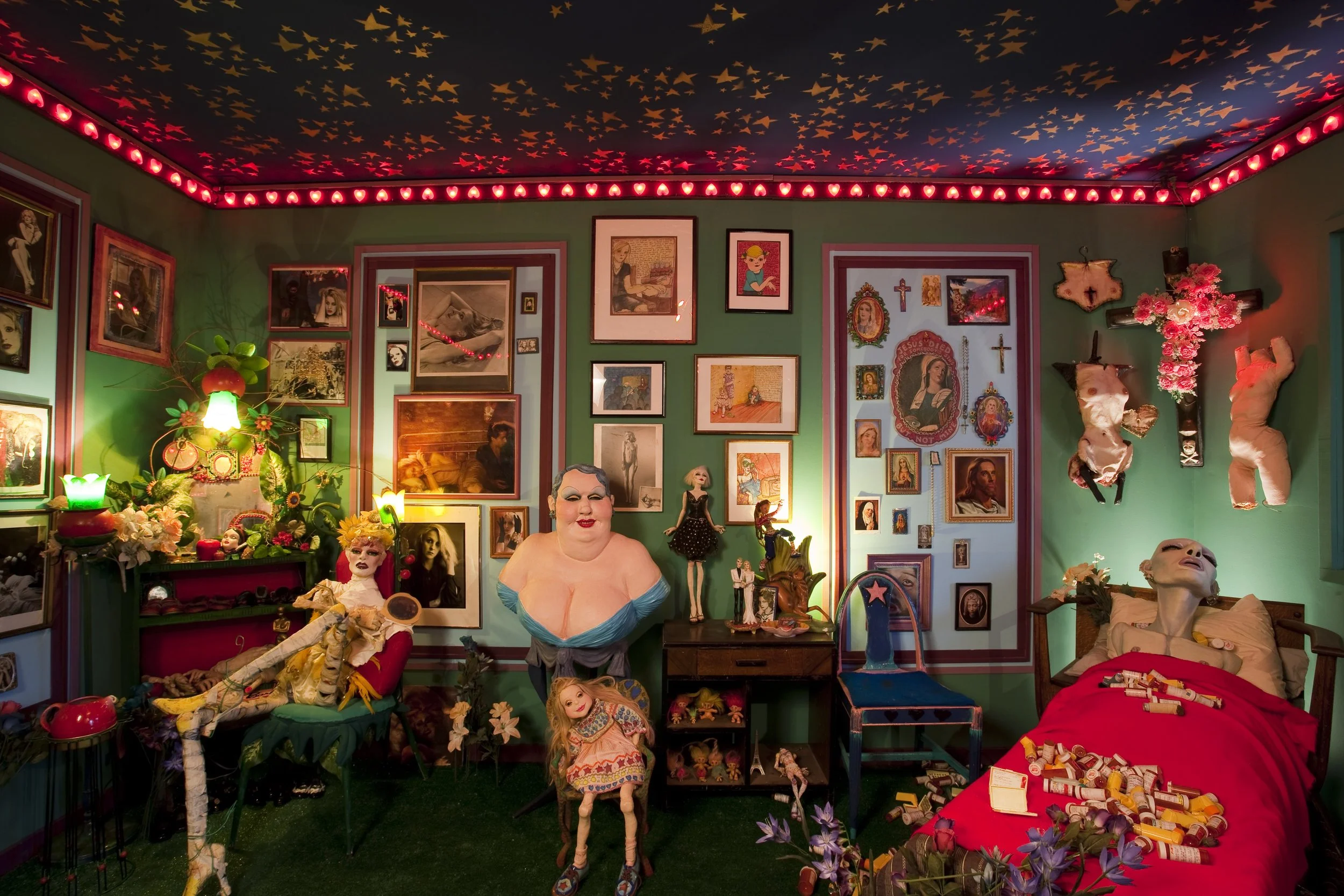
Fig. 1: Greer Lankton, It's All About ME, Not You (1996). Photographs by Tom Little. Courtesy of Mattress Factory.
Is narcissism and egocentrism a fundamental sign of decadence? Decadence has often been aligned with the excessive and indulgent, with pleasure and luxury; it often suggests moral or cultural decline.[2]
Greer Lankton was undoubtedly a decadent artist. Her work explores excess and glamour, celebrity culture and the carnivalesque (quite literally, in carnival figures). In her 1977 sketchbook, she splits a page into four categories: eccentricity, normal, wholesome, and decadence.[3] For each, she makes a list of pros and cons. Under ‘normal’, the sole pro is ‘easy to flow (at least for a while)’, and the cons are ‘trying to make the foot fit the shoe’ and ‘conformity and loss of identity’. For decadence, the cons are ‘stale’ and ‘excessive’, and the pros ‘can open’ and ‘extreme refinement’. The opposite page examines her approaches to growing up and to her transition. The performativity of identity, from normalcy to decadence, is evidently at the forefront of her mind, even as a teenager.
Lankton was born in 1958 in Flint, Michigan. Her father was a Presbyterian minister. She studied first at the Art Institute of Chicago, then at the Pratt Institute in New York. She socially transitioned as a teenager and had gender affirmation surgery at the age of twenty-one, while still a student. Her father convinced his church’s board to cover the costs of the surgery under the church’s health insurance; they expressed greater comfort with a transsexual daughter than a flamboyant, genderqueer son.[4]
In New York, she became a fixture of the downtown Manhattan creative scene. She was photographed by Peter Hujar, David Armstrong and Nan Goldin. Goldin became a close friend, describing her as ‘one of the luminaries of the East Village renaissance: beautiful, glamorous, wild and hysterically funny’.[5]
Her work has often been read solely in terms of her gender and trans identity, without paying attention to the diverse and complex artistic ecology that she was a part of. The Downtown scene was an artistic revolution: eclectic, multimedia, and without a specific centre or focus. As Marvin J. Taylor writes, ‘[i]n the mid-1970s a distinctively new attitude toward artistic production surfaced in Downtown New York. It was not a new aesthetic, not a new style, and not a unified movement, but rather an attitude toward the possibilities and production of art’.[6] Many of the artists involved in this scene were queer — and, indeed, queer culture (including publishing networks, nightlife, and performance) was an essential part of this moment. ‘Rather than overthrow traditional forms and establish a new movement, Downtown work sought to undermine from within the traditional structures of artistic media and the culture that had grown up around them’.[7]
Lankton’s work was included in highly influential group shows at MoMA PS1 and the Whitney Biennial — and, in the same year, 1995, at the Venice Biennale. She had exhibitions with Gracie Mansion, a pioneer of the 1980s East Village art scene; and often staged her sculptures in the windows of Einstein’s, a boutique shop run by her husband, Paul Monroe. These works straddled the line between public and private, between the privacy of the store-cum-gallery and the public street outside. Much like gender, these works existed where the self meets the other.
Lankton’s work became structured by her audience, and her understanding of her audience. As she explained in an interview: ‘Sure I was trying to understand myself, but I’m aware of my audience. Every time I meet people they have the same questions. No one really knows about transsexuality and they want to so I may as well tell them. I’m not really trying to educate but they may as well know. I would like to do a transsexual etiquette book. So many boys have no manners towards me: they’re the worst’.[8] Much of her early work explored her own medical transition — as well as her experiences of psychiatric institutionalisation — and made reference to queer and trans icons, like Candy Darling and Divine.
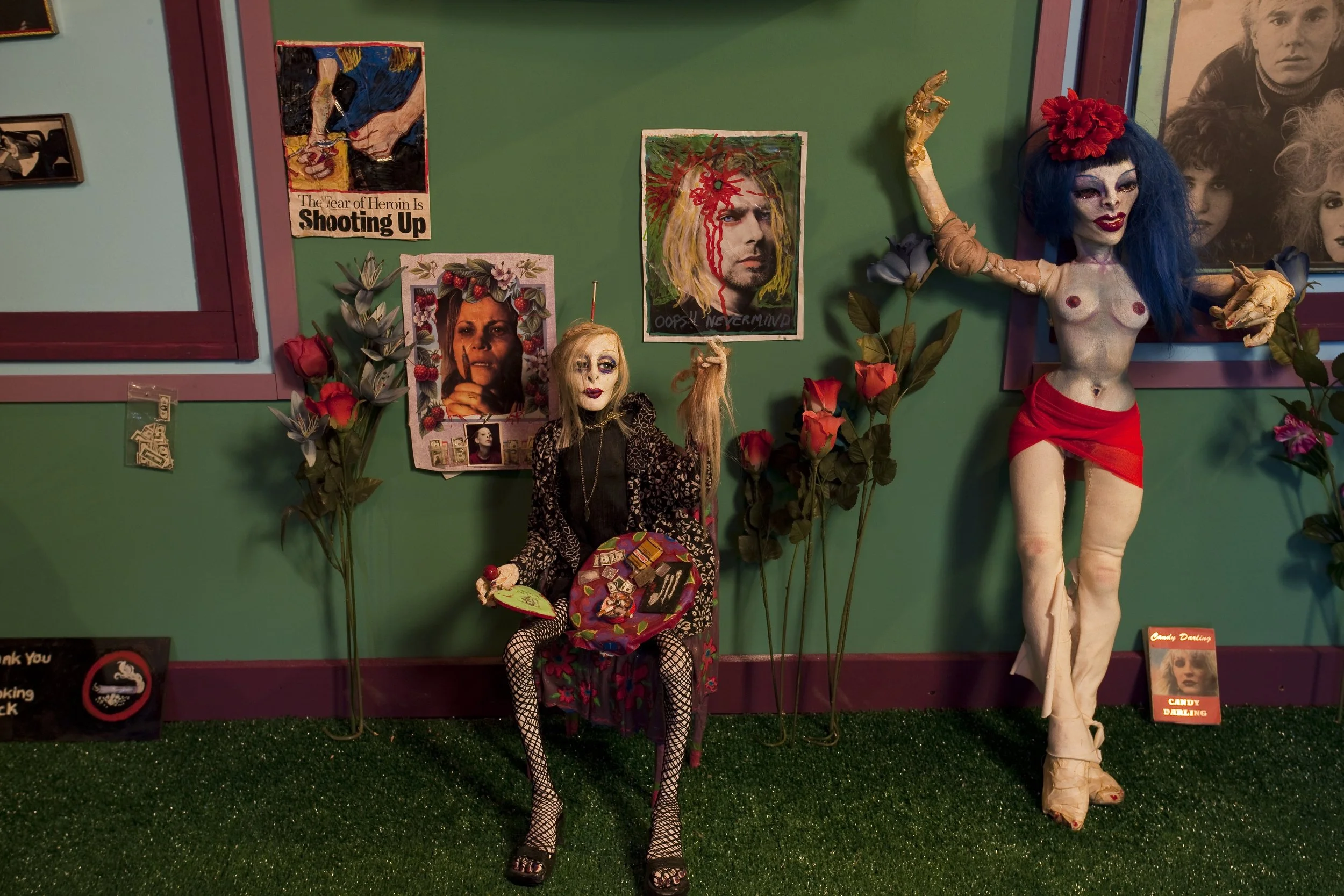
Fig. 2: Greer Lankton, It's All About ME, Not You (1996). Photographs by Tom Little. Courtesy of Mattress Factory.
Dolls, dolls, dolls
Lankton is best known for her dolls. She made small, crafty dolls as a child. At art school, she developed wearable dolls: a sculpture not unlike a fat-suit that she could put on and perform in. As she established herself as an artist, her dolls became more complex and posable, with internal skeletons and carefully modelled faces. They might be clothed; they might be naked, revealing a woman with breasts and a penis. A genderless torso is split open to reveal soft organs; an intersex figure gives birth. She made dolls of Jackie Kennedy and Andy Warhol. She created characters who she would dress, pose, and photograph. She made multiple dolls of herself, painfully thin, in recovery.
As Roberta Smith — critic for the New York Times — wrote in her obituary:
Beautifully sewn, with extravagant clothes, make-up and hairstyles, [Lankton’s dolls] were at once glamorous and grotesque and exuded intense, Expressionistic personalities that reminded some observers of Egon Schiele. They presaged many of the concerns of ’90s art, including the emphasis on the body, sexuality, fashion and, in their resemblance to puppets, performance.[9]
Of course, ‘doll’ is also used as a slang term for a trans woman, which derives from the Ballroom community — an important queer presence in New York in the 1980s, although it’s unlikely Lankton would have been present within the scene. ‘“Doll” is another word for a trans woman or a transfeminine person that’s commonly used as a term of endearment within trans communities’, writes Denny in discussing the word’s recent surge in popularity. ‘A doll is typically feminine-presenting or even hyperfeminine, though not strictly’.[10] While some might criticise ‘doll’ as a reductive model of femininity and womanhood, Lankton’s engagement with the doll complicates these terms. She deconstructs the interplay of identity with her carefully constructed, occasionally grotesque, and often very humorous sculptures. ‘This aspirational model of femininity is best summarized by the recurrent ‘“doll” figure’, writes Quinn J. Troia, explaining that the doll-as-symbol is ‘something perfect to be seen and valued for its beauty and intentional construction’.[11]
Many contemporary critics dismissed Lankton’s work as naive and childish, or ugly, poor parodies. The late, great Gary Indiana was one of her early champions, writing in a review of one of her solo shows:
These objects could be called dolls, with the stipulation that while most dolls tend to represent generic types, each of Lankton’s has a distinct identity and many derive from actual persons. […] Lankton’s creatures live in a psychic interzone where genitals and gender identity are scrambled in the play of appearances, and reveal an exacerbated, possibly mutilated sexuality as the trigger of personality.[12]
We might think of her dolls as decadent. They are bold, brilliant, and defiant. The ‘exacerbated, possibly mutilated sexuality’ speaks to a certain history of decadence, including Weimar Germany and its aftermath. Lankton cites Hans Bellmer — a German Surrealist whose work was denounced as ‘degenerate’ by the Nazi party — as her favourite artist. He, too, made complex, contorted dolls, charged with a complex, forbidden sexuality. The play of gender roles and sexual morality brings to mind Rachilde’s 1884 novel, Monsieur Vénus. Incidentally, a room at Tate Modern currently takes its title from this Decadent text, and while Lankton’s work isn’t included, her art would fit perfectly into this constellation: photography by Claude Cahun; a genderqueer portrait of Lawrence Alloway by his partner Sylvia Sleigh; fleshy, phallic forms by Louise Bourgeois and Dorothea Tanning. In the novel’s final act, the central character, Raoule de Vénérande, an artist, makes a wax dummy of her deceased beloved, replete with real hair and teeth and nails. Lankton’s dolls serve a different purpose to Raoule’s (or Bellmer’s), imagining and creating new possibilities instead of embodying personal, projected fantasies.
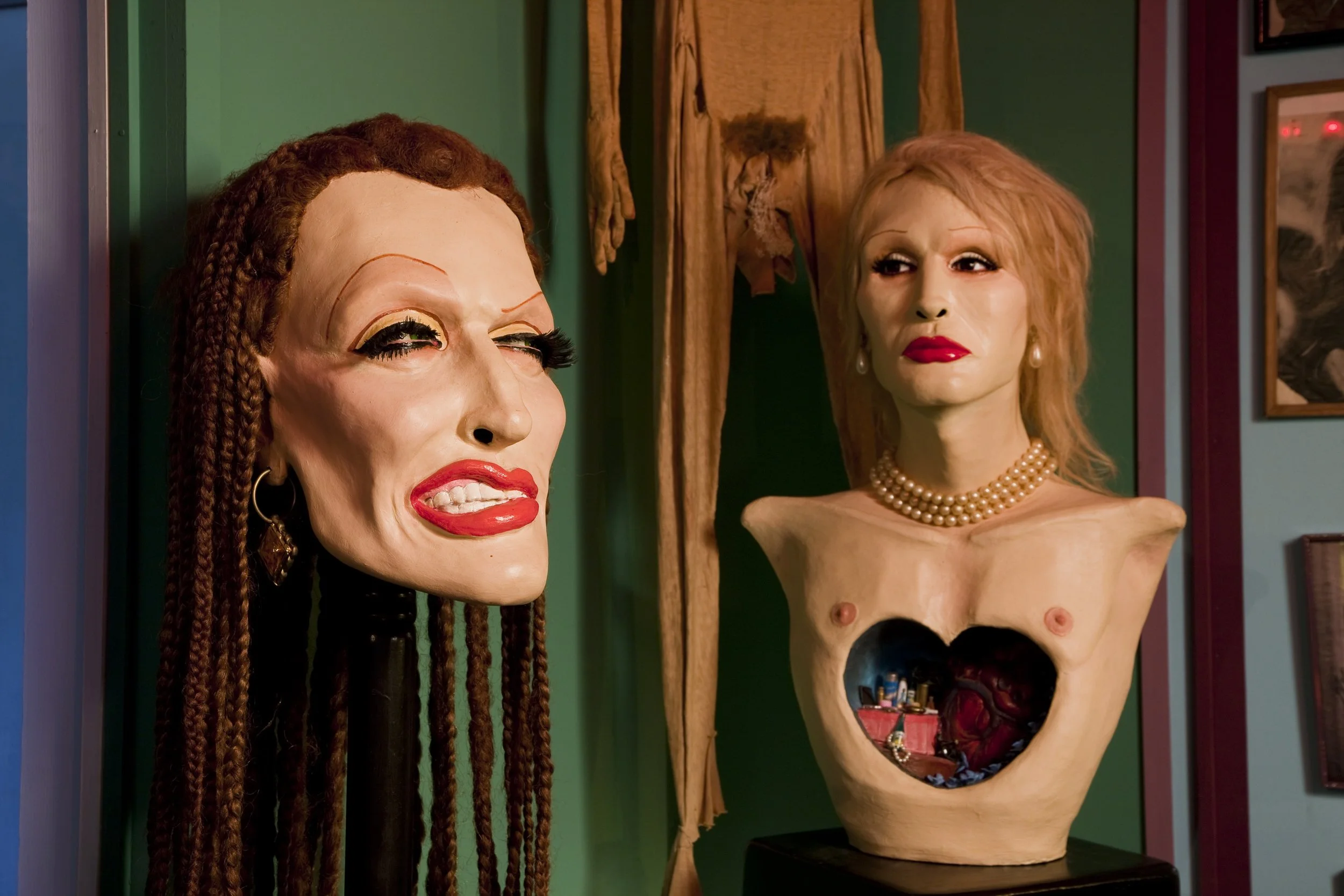
Fig. 3: Greer Lankton, It's All About ME, Not You (1996). Photographs by Tom Little. Courtesy of Mattress Factory.
Lankton played with excess, to recuperate the excess from that which she was otherwise denied She examined the limits of the corporeal body and the social body. ‘She was interested in bodies, period — what they looked like, how they moved, which bodies were deemed unfit for society — but she was most interested in bodies that captured her attention or spoke to her in some way’, writes Harron Walker. As Julia Skelly writes, ‘[s]ome artists are decadent monsters. Some artists create decadent monsters’.[13] Lankton, I would venture, does both, and troubles the distinction between the two. ‘Their materials are glitter, metal, leather, porcelain, velvet, rhinestones; anything sparkly, shiny, gorgeous. Decadent monsters protect the vulnerable, and I think they are inviting us to do the same’.[14] Lankton protected her dolls and was, in turn, protected by them, as talismans and family alike.
How might her work be in dialogue with an artist such as Andy Warhol, who was so preoccupied with matters of appearance and artifice? ‘By the way I’m an artist and Andy Warhol was the dullest person I ever met in my life’, she once noted.[15] He was also focused on surface, artifice, and how we construct and are constructed by our identities. Warhol did, of course, make sculptures, but his output was dominated by paintings, screen prints, and films, whereas Lankton’s work climbs into the space of the gallery, and lives in the shop window. Her dolls confront their viewer with a tactility and a liveliness, as if they have lives of their own, as if they might come alive.
It’s All About ME, Not You
It’s All About ME, Not You (1996) was Lankton’s final completed work: a large-scale installation that took up a full gallery. The work is roughly the size of her apartment at the time, filled with a number of her dolls and other sculptures, as well as works accumulated and collected by other artists — including a number of portraits of her, taken by the likes of Hujar and Goldin. She died of a cocaine overdose days after the work debuted at the Mattress Factory. (After years in storage, the work is now a permanent installation at the Mattress Factory). She wrote an artist’s statement for the show, which concludes with the following strange, poetic list:
Artificial Nature
Total Indulgence
Dolls engrossed in glamour and self-abuse
The vanity
The junkie
The anorexic
The chronic masturbator
‘It’s all about ME’
Not you
Trapped in my own world in my
Head in my tiny tiny
apartment.[16]
These themes — ‘Artificial Nature, Total Indulgence’ — scream of decadence, a postmodern deconstruction. ‘The vanity/ The junkie / The anorexic /The chronic masturbator’: are these all facets of Lankton herself, or an accumulation of selves? An emaciated doll, a stand in for Lankton, lies on a couch in the room, surrounded by dozens of pill bottles, all prescribed to Lankton.
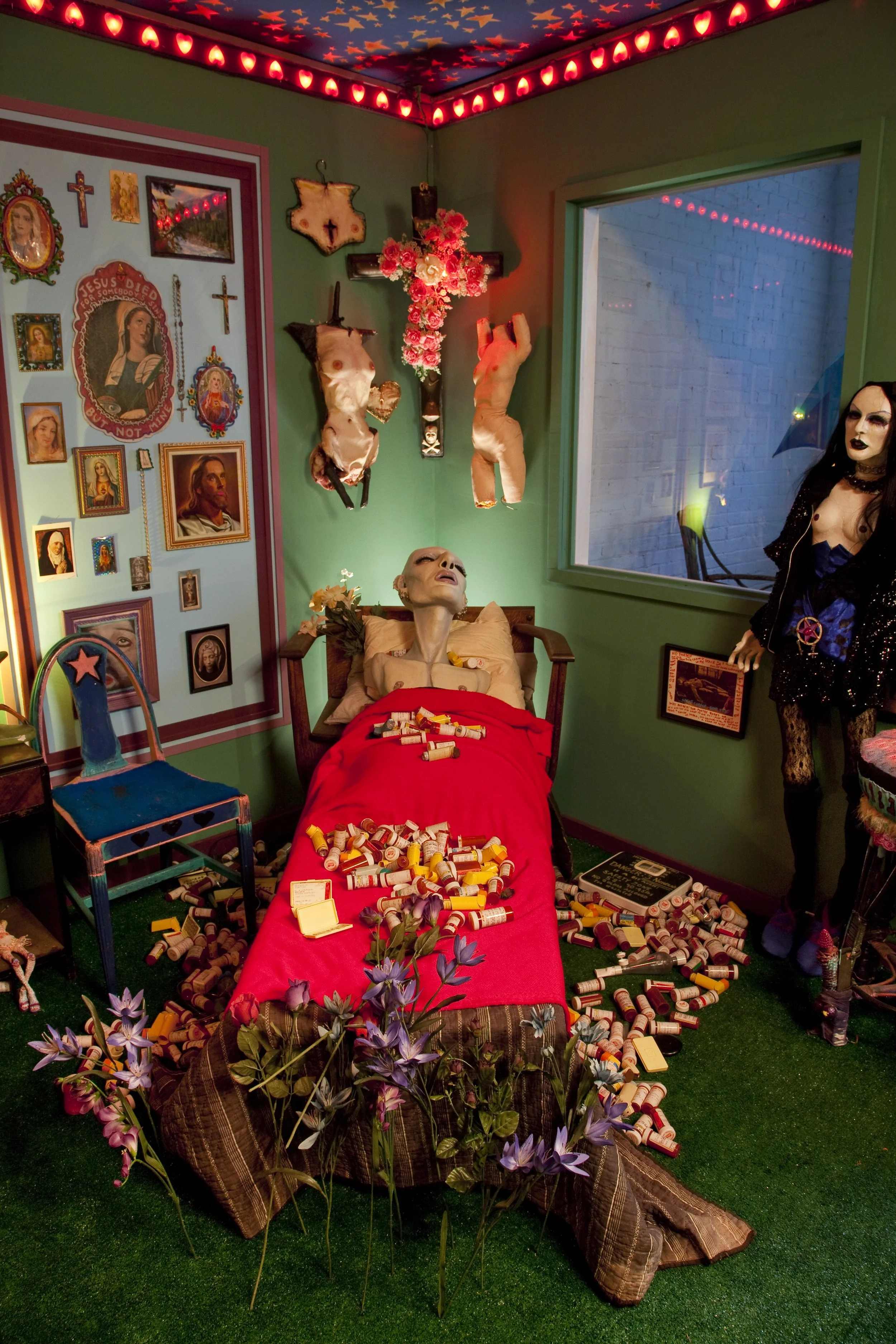
Fig. 4: Greer Lankton, It's All About ME, Not You (1996). Photographs by Tom Little. Courtesy of Mattress Factory.
The work contains several ‘shrines’ to Candy Darling, Patti Smith, the Virgin Mary, herself, and others. There is an excess and an abundant egotism here: ‘It’s all about ME’. Narcissism, understood psychoanalytically, exists along a spectrum, from self-care to egocentrism, from the ordinary to the pathological. Max Nordau decries egotism in his detestable diatribe, Degeneration: ‘The two psychological roots of moral insanity, in all its degrees of development, are, firstly, unbounded egoism, and, secondly, impulsiveness’.[17] This work predates Freud’s foundational work on narcissism (1914), and the first clinical paper on the subject by Otto Rank (1911); nonetheless, ‘unbounded egoism’ speaks to an overbearing, all-consuming narcissism, which Lankton parodies and indulges. This also returns us to her icon Hans Bellmer — dismissed by the Nazis as degenerate (Entartete Kunst) — who was similarly defiant in his embrace of a label used to dismiss his work.
A certain amount of narcissism is necessary to protect the ego and the self; it is a self-defence mechanism, one that might be dialled up within a hostile and uncompromising world. Trans women are often labelled narcissistic, as if they are overly obsessed with appearances. ‘Passing’ is often a tool of self-preservation. Lankton leans into that which she might be denied by celebrating the mundane, and centring the outsider. Maybe — for a short time, in this tiny, tiny apartment — it can be all about her, for once.
Lankton’s work is decadent inasmuch as it holds up a mirror to the decadence of her world — its excesses and its decay. I think of her 1985 assemblage sculpture, If You Can Pass For A Girl: a bewigged mirror with the work’s title scrawled across the glass in black marker pen. This piece was inspired by the moment when Greer came out as trans to her family over dinner, aged nineteen, during a summer vacation in Park Forest, Illinois. Her (cisgender) sister responded, ‘[y]ou don’t look anything like a girl’, to which Greer replied, ‘[i]f you can pass for a girl, anyone can’.[18] Her work often carries this biting, satirical bent, although it is often taken at face value and wholly seriously.
Lankton works to centre herself and to assert her presence in a world that would rather exclude, institutionalise, or kill her. As P Staff writes, ‘Greer seems like she couldn’t handle the world that was being given to her, and the historical narrative is to pathologize that. In that vein of thinking, it feels like the dolls become this strange facsimile of a world that is intolerable’.[19] She creates a whole world in her tiny apartment, a space to escape from the world that she — magnanimously — shares with us all. She may have felt ‘trapped’ in her ‘own world’ — which she elides both with her ‘head’ and her ‘apartment’ — but she nonetheless invites us in to share the space with her. It’s tragic that Lankton herself only briefly got to see this work brought to life. Her dolls have had to live by themselves, without her; they alone populate her world. Staff adds that the dolls seem to have learned to ‘tolerate’ the world, ‘or that their being, their material weight, their existence in the world, relieves Greer, in some way, of her having to be in the world’.[20] Her work goes beyond visibility politics, creating complex constructions that expand our understandings of gender and sex at a time when trans identity was still establishing itself. She does not offer easy answers but represents the complexity of her experiences: sometimes contradictory, often difficult.
The Archive
P Staff, Kay Gabriel, Harron Walker, Zefyr Lisowski have all published essays on Lankton in the past two years that combine personal history with cultural criticism. In her journal from September 1977 — published as a facsimile copy in 2024 by Primary Information — she expresses a number of astute and forward-thinking views on gender performativity (years before Judith Butler would coin the phrase): ‘I swear to / become my body’, or ‘Ockwell says step Back to see the difference / This is applied to Anatomy / However clever boys apply it to girls and discover the difference transends [sic] the obvious’.[21]
If she were alive today, Greer would be 67. Unfortunately, the concerns of her work remain very relevant. Can you imagine the uproar if a major gallery exhibited a transgender Jesus Christ today? As I write this, The New Yorker has just published a piece by Grace Byron with the headline ‘The War on Trans Art’. Lankton is an ancestor, a mother-figure for many contemporary trans artists and writers. Her work needn’t — shouldn’t — only be read through this lens, but nonetheless she remains a vital figure in the history of trans art.
Much of her archive was donated to the Mattress Factory, who have painstakingly digitised the whole collection. Her drawings, journals, and photo negatives are freely available to peruse. Paul Monroe runs an active Instagram account — The Greer Lankton Archive Museum (G.L.A.M.) — celebrating her life and art. MoMA recently included Lankton in their major survey show, Vital Signs: Artists and the Body (2025), including videos, drawings, and sketchbooks recently donated to their permanent collection.
Lankton’s work emerged from a moment of crisis: personal, social, geopolitical. The New York art scene was falling apart, ravaged by the AIDS epidemic. This moment was the ‘end of history’, the end of the millennium — for some, the end of the world. In light of this — despite this — Lankton worked to celebrate the kitsch and the cute, to crack jokes, to make strangely beautiful sculptures that would challenge their viewer — and to always celebrate herself. Her work is often self-indulgent, celebrating pleasure, luxury, and too-much-ness. Instead of shrinking herself, stripping back her life and her art, she dials everything up. She refuses to be quiet or small; she refused to disappear. Hers is not a pathological narcissism, but a necessary one. She wrote in her September 1977 journal: ‘As the late Great Candy said “I’ve got a right to live”’.[22] Even after her death, she asserts herself, without compromise.
//
Dr Louis Shankar is a writer, researcher, editor, and teacher based in East London. Their research practice sits at the overlap of art history, queer theory, and psychoanalysis. They write about artists such as David Wojnarowicz, Peter Hujar, Greer Lankton, Nan Goldin, and Paul Thek. They are an editor at The BitterSweet Review, a magazine for new queer art and writing.
Notes
[1] Sarah E. Simons, ‘Social Decadence’, The Annals of the American Academy of Political and Social Science, 18 (September 1901), pp. 63–86 (p. 79), https://www.jstor.org/stable/1010371.
[2] See: David Weir, ‘Afterword: Decadent Taste’, in Jane Desmarais and Alice Condé (eds) Decadence and the Senses (Cambridge: Legenda, 2017), pp. 219-228; Simons, ‘Social Decadence’.
[3] Greer Lankton, Sketchbook, September 1977, Primary Information (2024), n.p..
[4] See: Zefyr Lisowski, ‘Uncanny Valley of the Dolls’, The Believer, Issue One Hundred Forty-Five (3 April 2024) https://www.thebeliever.net/uncanny-valley-of-the-dolls/, accessed 21 October 2025.
[5] Nan Goldin, ‘Nan Goldin on Greer Lankton,’ Artforum, 38 (2) (October 1999), pp. 125–26, 161–2 (p. 125).
[6] Marvin J. Taylor, ‘Playing the Field: The Downtown Scene and Cultural Production, An Introduction’, in Marvin J. Taylor (ed.) The Downtown Book: New York Art Scene 1974–1984 (Princeton, NJ: Princeton University Press, 2006), pp. 17–40 (p. 20).
[7] Taylor, ‘Playing the Field’, p. 21.
[8] Greer Lankton, ‘My Life is Art,’ interview by Carlo McCormick, East Village Eye, 5 (49) (November 1984), pp. 18–19 (p. 19), available at: https://static1.squarespace.com/static/5d40a0bea6305d0001bc1663/t/5e8c87b809dbf467b618e801/1586268093800/Greer+Lankton-East+Village+Eye-Nov+1984.pdf, accessed 21 October 2025.
[9] Roberta Smith, ‘Obituaries: Greer Lankton, 38, a Sculptor Who Turned Dolls Into Fantasy,’ New York Times, 25 November 1996 https://www.nytimes.com/1996/11/25/arts/greer-lankton-38-a-sculptor-who-turned-dolls-into-fantasy.html, accessed 21 October 2025.
[10] Denny, ‘What Is a “Doll” and Where Does the Term Come From?’ Them, 30 April 2025, available at: https://www.them.us/story/what-does-doll-mean-protect-the-dolls, accessed 21 October 2025.
[11] Quinn J. Troia, Cyborgs, Dolls and Passing Narratives: Trans-femininity in Popular Music (unpublished honours thesis, Lewis Honors College, 2023), available at: https://uknowledge.uky.edu/cgi/viewcontent.cgi?article=1017&context=honors_theses, accessed 21 October 2025.
[12] Gary Indiana, ‘Greer Lankton at Civilian Warfare,’ Art in America (November 1984), available at: https://www.instagram.com/p/DBooqwQvV7P/?hl=en, accessed 21 October 2025.
[13] Julia Skelly, ‘Decadent Monsters’, Staging Decadence Blog, 28 July 2025, available at: https://www.stagingdecadence.com/blog/decadent-monsters
[14] Skelly, ‘Decadent Monsters’.
[15] Greer Lankton, ‘It’s All About ME Not You,’ Mattress Factory, available at: https://mattress.org/exhibition/its-all-about-me-not-you/, accessed 21 October 2025.
[16] Lankton, ‘It’s All About ME Not You’.
[17] Max Nordau, Degeneration, trans. by Howard Fertig (William Heinemann, 1889), available at: https://www.gutenberg.org/files/51161/51161-h/51161-h.htm, accessed 21 October 2025.
[18] @greer_lankton_archives_museum, ‘🌬️💗 * Assemblage: Greer Lankton 1985,’ Instagram, 29 October 2023, available at: https://www.instagram.com/p/Cy_QKFLREk4/, accessed 21 October 2025.
[19] P Staff, ‘Create the World You Don’t Have Access To,’ MoMA, 8 November 2024, available at: https://www.moma.org/magazine/articles/1145, accessed 21 October 2025.
[20] Staff, ‘Create the World You Don’t Have Access To’.
[21] Lankton, Sketchbook, n.p..
[22] Lankton, Sketchbook, n.p..
[AA1]Is this quote right? Repetition of ‘live in the world’